Most institutions have a scheduling system. Very few have a scheduling environment — an integrated set of capabilities and systems that connects curriculum planning through to student timetable delivery. Click any box to explore its features and a five-point checklist.
Click any system or capability in the diagram to jump to its description and checklist below.
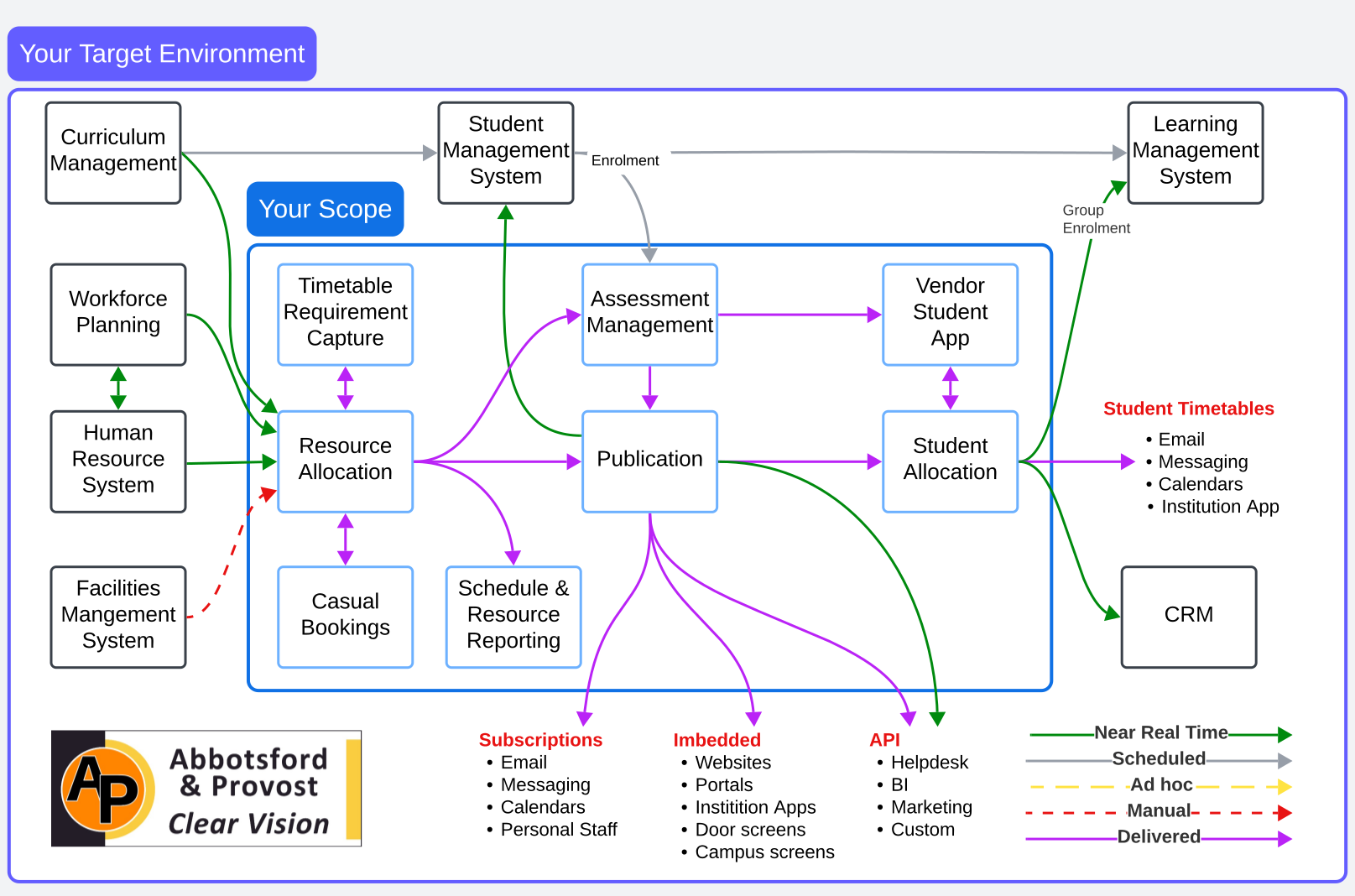
Jump to a system or capability
Collects, manages and tracks scheduling requirements from schools and faculties — the room, resource and activity specifications that scheduling needs to build the timetable. This is a high-friction capability: most universities still rely on email, spreadsheets and manual follow-up, making it a persistent source of conflict between scheduling teams and faculties.
The core scheduling engine — allocating rooms, staff and equipment to activities based on constraints, preferences and institutional rules.
Manages ad hoc room and resource requests outside the structured timetable — events, meetings, one-off classes and external bookings.
Manages examination and assessment scheduling — from requirement capture through room allocation, invigilator assignment and student notification.
Controls the release of timetable data to students, staff and downstream systems — managing what is published, when, and through which channels.
Provides operational and strategic reporting on scheduling outcomes, resource utilisation, compliance and the gap between planned and actual activity.
Allocates individual students to specific classes, tutorials and activities — replacing manual student personal timetables with automated, preference-aware allocation.
Delivers personalised timetables and scheduling information to students through a mobile app — providing real-time updates, notifications and calendar integration.
The source of truth for student enrolment, course completion and academic record — the primary upstream data source for student allocation and timetabling.
The upstream source of course and programme definitions — where the teaching resource requirements for scheduling should originate.
Models future teaching demand and resource requirements — including roles that may not yet exist or be filled. Connects planned curriculum demand to the resource supply chain, enabling budgets and timetables to be built on realistic resourcing assumptions.
The source of truth for actual employees and contractors — confirming who exists, what their contract entitlements are, what they are qualified to teach, and when they are available. HR feeds confirmed staff data into Workforce Planning and directly into Resource Allocation.
The source of room and space data — capacity, type, equipment and availability — that underpins physical resource allocation.
The downstream academic delivery platform — receives group enrolment data from the Student Management System to ensure students have access to the right course materials.
Receives student timetable and engagement data to support marketing, student success and retention activities.
Every system in the target environment depends on complete, consistent and trustworthy data. In most institutions, scheduling data is the hidden constraint — incomplete, inconsistent and too poor to support AI, automated allocation or reliable financial reporting.
We work with scheduling teams and institutional leaders to assess the current state, design the target environment and build the business case to get there.